Showing posts with label running doctor. Show all posts

Tuesday, March 18, 2014

Strengthen Your Strides!

So many of my patients are coming in asking for exercises to strengthen their feet so they will decrease their overuse injuries and be able to wear more flexible shoes. A recent study showed that 27% of people can run barefoot without any issues and that another 14-17% can learn to run barefoot. The other 60% or so have unstable feet that are prone to injury if they run barefoot. More studies are needed to see if these percentages really hold up, but more flexible running shoes with less heel drop are here to stay. Help yourself by strengthening your feet! These exercises can really help thwart the injury bug and stabilize flexible foot types.


Tuesday, December 3, 2013

Oral Sunscreen? Try Heliocare to Decrease the Burn!

I just got back from a fabulous vacation over Thanksgiving in Turks and Caicos. Amazingly I came back slightly tan, but no sunburn this time! Liberal use of 50 SPF sunblock and daily dose of Heliocare definitely made all the difference. I lost a very close friend to melanoma last year and this woke me up to the dangers we face everyday in Texas due to significant sun exposure. My dermatologist friend, Dr. Angela Bowers, introduced me to Heliocare and I really think it made the difference.
Runners are notoriuous for getting patchy sunburns. Even if you remember to slather on the sunscreen, you somehow managed to miss your nose? Or the back of your hand? Or the back of your calf? You're not the only one. According to the American Academy of Dermatology, most people apply less than half of the optimal amount of sunscreen, a habit that adds up to a lot of burned patches and uncomfortable rides home from races. The ahi tuna look the day after a marathon is just not good!
If you don't completely trust your sunscreen skills, you might be interested in Heliocare, a supplement that promises sun protection in a pill. Each Heliocare capsule contains 240 milligrams of an extract of Polypodium leucotomos, a tropical fern rich in antioxidant compounds such as caffeic acid and ferulic acid.
Here is some info I took from their website:
Users are instructed to take one capsule every day with water or juice. Two capsules are recommended before heavy exposure to the sun. I took two a day on vacation.
The claims
The company website says Heliocare is an "all natural oral antioxidant which helps protect against UV ray damage and aging." The fine print clarifies that "it is not a sunscreen and should be used in addition to topical skin protection."
The bottom line
No supplement could ever replace the need for sunscreen, but the idea of sun protection in a pill isn't as far-fetched as it may sound., says Dr. John Murray, a professor of medicine in the dermatology department at Duke University School of Medicine in Durham, N.C.
As Murray explains, sun damage is an oxidative process. UV rays can trigger the release of harmful compoundsknown as free radicals, and antioxidants can help protect the skin by mopping up the free radicals before they have a chance to cause mischief. In fact, Murray says, plants contain antioxidants largely to protect themselves from harmful rays.
But taking a pill isn't necessarily the best way to harness the protective power of antioxidants, Murray says. Instead, antioxidants are likely to be more effective if they are applied directly to the skin: In 2008, Murray and colleagues published a study showing that a topical ointment containing antioxidant vitamins C and E helped prevent both visible sunburn and the type of DNA damage that can raise the risk of skin cancer.
"Ingesting a pill doesn't mean that the antioxidants will actually reach the skin," Murray says. For example, you can protect your skin somewhat by taking vitamin E and vitamin C supplements, but "the effect isn't going to be as great as [topical] vitamins E and C."
Murray doesn't recommend any particular product. However, some sunscreens, including Aveeno Continuous Protection Sunblock Lotion and Soleil Expert Sun Care, do contain antioxidant vitamins.
There is solid evidence from the lab and human trials that extracts of Polypodium leucotomos -- Heliocare's active ingredient -- can offer at least some sun protection, says Dr. Salvador Gonzalez, a dermatology researcher at Memorial Sloan-Kettering Cancer Center in New York City who has co-authored at least 17 studies on the plant.
For example, he co-wrote a study published earlier this year that found that a Polypodium leucotomos extract blocked skin-damaging enzymes and helped build up collagen in human skin samples exposed to UV rays. Gonzalez is a paid consultant for Industrial Farmaceutica Cantabria S.A., the Madrid-based parent company behind Heliocare.
"It's important to keep in mind that Heliocare is not a magic bullet against sunburn," Gonzalez says. He estimates that the supplement provides a sun protection factor of 3, which would put it roughly on par with a weak sunscreen. It's certainly not enough to completely prevent sunburn, he adds, but any burns would be slower to develop and less severe.

Oral sunscreen sounded far-fetched to me, but I definitely noted a difference. Reminder: This is not an alternative to sunscreen, just some additive protection!


Dr. Crane is running the Boston Marathon in honor of David Bloom, a beloved physical therapy partner of FAANT to raise money for melanoma research and awareness. For more info or to donate to the cause click here. Dr. Crane is personally matching dollar for dollar your donations! No amount is too small to make a difference!

Monday, November 18, 2013

MyRunDoc Running Boston Marathon in Tribute to a Friend!

I have dedicated the 2014 Boston Marathon to the memory of David Bloom, my long-time physical therapy partner at Restoration Physical Therapy. See the whole story on my fundraising page for the Melanoma Foundation of New England.

Fundraising Websites - Crowdrise

Tuesday, October 8, 2013

Why Do My Shins Hurt After I Run?


I ran the Lake Grapevine Runners and Walkers Double Trouble 5K/10K duo this weekend. Fun! Crazy weather! It started out at 78 degrees and was down to 52 when we finished the 10K portion.  Got to love a good cold front! A good time was had by all, and it’s great to see everyone out at the lake.

My funny story for the day was that one of the runners sidled up next to me and asked, “Why do you think my shins hurt after I run?” and “How come they don’t hurt when I’m running?” Of course, my first reaction was “It depends….”, and “Good question. Let me catch my breath and I might have an intelligent answer for you.”

Here was my answer:

Your shins can hurt after running for a variety of reasons. The most common is a shin splint. This is actually a term commonly used to describe medial tibial stress syndrome.  What? Yes, stress causes pain along your shin bone and can even cause a stress fracture. In the early stages the painis actually myositis (irriation of the muscle that runs along the shin bone) and this will “warm up” when you run. Stress fractures don’t “warm up.”

Why does this happen? Most common reason is either worn out running shoes or inappropriate shoes to start with. If you have a very high arch, you need a more cushioned shoe. If you have a flat or low arched foot, you need a more stable shoe. Lots of times you just need to part with your old beloved super worn-out running shoes.

Other reasons can be a change in surface like going from the treadmill to concrete. Or a rapid increase in training mileage or increased speed.

When is it time to stop the home remedies and go to the doctor?
Pain 5-7/10 or in a pinpoint spot can indicated a stress fracture!
Pain that has lasted more than a few weeks with rest, ice and over-the-counter anti-inflammatories.
Lastly, if you have changed shoes, tried stretching and icing and still have pain daily….time to come in for a visit.

Some people need help buying shoes, some people need functional foot orthotics to re-align their gait and some people need to rehab their injury with physical therapy.

So the take home point is that your shins shouldn’t hurt after you run!! If they do, you should take a look at you shoes and training patterns! When in doubt, give us a call so we can take a look and make your shin pain go away!

FAANT gave away cute little Body Glide buddies for your gym bag at the race! Adorable!


Friday, May 31, 2013

When Do I Need New Orthotics?

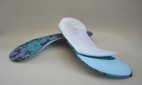
Contrary to popular opinion, custom foot orthotics do not last forever! It is amazing to me how many runners come in with an injury and take orthotics out of their shoes that were made when I was in high school! If your orthotics are more than 5 years old, they probably need to be replaced. Feet change and the devices start to wear out.

If you can't remember how old your orthotics are, here are some tips on how to determine if it is time to replace them:

  • Your feet hurt!!! That pain you had reduced or cured with the device has made a comeback – I can’t think of a better reason to get your feet and devices checked
  •  Yourorthotics are held together with duct tape, gorilla glue and cardboard – those home modifications just don’t do the trick
  • If your orthotics wobble, you may fall down – motion in devices that wasn’t there before can lead to foot pain and instability
  • The top cover looks is thinner than you remember or has comletely fallen off – with time all materials will flatten and wear, if your top cover is paper thin, looks like a piece of foam Swiss cheese, or has been missing for months, get it replaced.
  • Cracks do not give character – cracks in the shell of device can occur with prolonged use, glue is not the answer and neither is duct tape.
  •  Added modifications are lost, loose or not providing the control or pressure relief they used too – just like top covers, modifications can flatten with time, and they can loosen and get lost.


These are just a few subtle reminders of when you need to have your orthotics replaced.   Obviously other problems occur.  While most devices last for several years, most insurance companies will replace a device yearly if problems with device are noted, so don’t hesitate and stop by for an evaluation. Just like eye glasses, your orthotics should be evaluated at least once a year by your favorite podiatrist!

Wouldn't a new pair of orthotics feel wonderful?

Sunday, April 28, 2013

There is Life After Running - Seriously!


There is Life After Running……Seriously

“When one door of happiness closes, another opens; but often we look so long at the closed door that we do not see the one which has opened for us.” Helen Keller, author, political activist, and speaker

This is my profound thought for today. We often, as runners, feel like our world is coming to an end when we can’t run due to an injury; or even worse, a permanent disability. This often happens in older runners due to knee issues or chronic back pain. Foot and ankle arthritis or a torn tendon can also cause a premature end to a running career.

Instead of looking at what we can’t do, we often need to rejoice in what we can. When I turned 40, I realized that I needed to start cross training so I wasn’t beating the heck out of myself every day. I reinvented myself as a triathlete. I hadn’t done any swimming seriously in over 20 years and couldn’t remember the last time I was on a bike. I had always just run!

I had a goal: a sprint triathlon in 3 months! I made a list and borrowed a triathlete friend for a shopping trip to the cycling shop. A cute pink road bike later, I was on my way. A bathing suit, cap and goggles were procured and I jumped into the pool at the gym. Surprisingly, my swim form and bike balance were not all that bad. A conservative training program and lots of encouragement got me to my first triathlon. That was 2008.  I have done many sprint and Olympic triathlons; 6 Half-Ironman and 2 full Ironman triathlons since then. I’m a stronger but slower runner now, but honestly my body feels way better.

Many of my patients have had the same type of result with cross training. Some have given up running for cycling due to an old injury or two. Yoga, pilates, cycling, circuit weight training, elliptical, swimming, and even Zumba can be fun diversions form a chronic ache.

The world does not end if we can’t run. Often its not a "I can’t run", but perhaps " I should run less often" scenario for most people. Take it from me, find something fun that will get your heart rate up and sprinkle it into your running. Your body will thank you. Cross training (also known as relative rest) is not a death sentence but can be a door into a whole new you! Who knows, you may find yourself owning a pink bike!!


Thursday, April 11, 2013

Reative Rest Options For Active Running Injury Recovery


It happens to all of us at one point or another. It doesn’t matter if you have the muscles and strength of LeBron James from the Miami Heat or the speed and soccer skills of Wayne Rooney from Manchester United. Sometimes there is just no avoiding it: we all suffer from a sport’s injury at some point in our lives. This week it was Derek Jeter from the New York Yankees still sidelined with his ankle injury from last season!  A running injury does not have to be a death sentence to your cardiovascular fitness, there are alternatives to keep you going while your body is healing whether you have a twisted ankle, plantar fasciitis, or a much too common stress fracture. Do not despair; relative rest can actually be a good thing! 
I love my swim training for triathlon!  Michael Phelps would certainly agree, swimming is an excellent, low-impact alternative to running.  As the water supports your body, your joints do not experience the same level of stress and impact they do during a run. There’s no doubt that swimming is a strenuous sport, allowing you to increase your endurance and reach your cardio fitness level just as easily as running. Besides working out, water is also frequently used for rehabilitation purposes, such as kicking your knees back and forth to build strength and increase range of motion after a knee injury or writing the alphabet with your foot to help the healing process of an ankle sprain. If you are someone who often struggles with shin splints, incorporating a swim into your training regime can help to eliminate this problem. Moreover, swimming is a total and complete body exercise, working everything from your arms and abs, down to your heels and toes.  And who knows, you may even decide to try a tri! 
Hate to swim? Fear of drowning or looking stupid in the pool?  If you are more of a land mammal than a dolphin, biking can be another substitute for running. A stationary bike is a great start following an injury as it enables you to adjust the resistance you’re pedaling against to minimize your pain. As you heal, you can increase the resistance and adjust your speed accordingly, or even switch over to a road bike. Similar to swimming, biking reduces the amount of stress on your joints when compared to running, but can still be used to burn calories and boost your endurance. 
 When swimming and biking can’t satisfyingly scratch your itch to run, why not try something completely different? It might not be the first thing you think after an injury, however yoga could be another new and unique alternative to running. And yoga is not just for girls! Some of the best yogi I know are guys who run with us in Grapevine at the Lake Grapevine Runners and Walkers Club! Yoga exercises work to stretch and extend every aspect of your body, including your skin, your muscles, your tendons and your ligaments. All the varying yoga postures will increase the flexibility of your body and ultimately help you to avoid future muscle tears and injuries. Yoga can be utilized as a way to build strength as well. Such stances as the upward dog and downward dog require you to support your body weight with your arms. These postures are then out held for a period of time, compelling the use of your muscles to maintain your balance. The benefits of yoga will not only help you avoid injuries in the future, but will help to perfect your overall running form through improved posture. It is important to keep in mind that some yoga poses will actually irritate your injury, so keep that in mind while you venture into the yogi world.
Last, but never least; you can try circuit weight training. This is combining 3 or 4 different push: pull combinations with light weight training that will increase your heart rate and increase your muscle metabolism at the same time. This is great off season training and recovery training. Think about it, burn fat and build muscle. What could be bad! You may even get some decent looking shoulders, abs and back out of it as well!
 When you do find yourself suffering from a an annoying injury, it can be difficult to accept the fact that you cannot and should not run. Furthermore, that runner’s high, the natural endorphins our bodies create when we run for long distances, can allow us to easily ignore even our most excruciating pains. As addictive as the runner’s high is, I urge you to listen to your body! You will know better than any doctor in the world when something is not right. When your body is sending you signals to take it easy, don’t ignore them. For example, what started out as three to six weeks off may quickly escalate into a year’s worth of recovery time if you push yourself past your limits. Listen!
 No matter what, always stay positive! Don’t forget that you will bounce back from an injury, just like you always have in the past. As long as you have the desire and drive to run, an injury will never hold you back for too long.
Happy Recovery!

Tuesday, January 8, 2013

Video: Help With Motivation to Get Running in the New Year!

Listen to the tips the doctor gives to get you going in the New Year! Let's get going and make running a daily habit again! The holidays are over and we need to get rid of those extra cookies!!


Monday, November 5, 2012

Reasons To Run

"The reason we race is not to beat each other, but to run together......"

A great sentiment for a Fall Monday morning.

This weekend saw the cancellation of the NYC marathon for obvious and logical reasons. I did have some peeps who made the trip to New York and were saddened not to be able to race, but their stories of how bad the city was hit by Hurricane Sandy and how awful the streets looked and felt, put the race cancellation into focus.

This weekend was also Ironman Florida and we had lots of competitors from the area have great races! The weather was favorable and lots of PR's were set! Got to love Ironman. It makes you feel invincible to cross that finish line!

Last, but never least, was the running of the annual DRC Half! This is one of the few years I have missed the race. The DRC Half marathon is a great race on a cool course and is run by runners! Shocker! This hometown race is always a great event and this weekend was no different. Lots of great reviews from veterans and newbies alike. It traditionally marks the 4 weeks until the White Rock Marathon (Now known as the Dallas marathon, but always going to be White Rock to us) and is a great warm up race for the marathon. Seeing some of the times this year, it looks like many are ready for the big race!

Happy Monday to all. Pick a race. Put it on the calendar! It will help you stay training through this busy holiday season!

Run Happy! And often!

Sunday, July 29, 2012

Paula Radcliffe Sidelined from London Olympic Marathon Due to Arthritic Foot Injury


Paula Radcliffe, the world record holder in the women’s marathon, withdrew from the Olympics today. Radcliffe, 38, has competed in four Olympics, but has never won a medal.  She experienced a flare of degenerative arthritis in her foot about 3 weeks ago and just can’t push off normally. She was quoted to say that her joint was “degenerative and badly damaged’, but does not expect that this will end her career.

Radcliffe failed to finish the 2004 Athens Olympics marathon and was 23rd in Beijing four years later after deciding to race while still recovering from a stress fracture in her thigh. She finished fourth in the 10,000 meters in Sydney in 2000 and was fifth in the 5,000 in Atlanta.

She is a three-time winner of the London Marathon, and had hoped for one more big victory in the capital.

Sadly, this is probably the end of her Olympic hopes. At 38, it is doubtful she will return to top form in 2016 at the age of 42. Doubtful, but not impossible!

Degenerative arthritis of your foot can be treated with anti-inflammatories, injections, functional foot orthotics, physical therapy, and surgery. Surgery can included cleaning up the joint, fusing the joint or replacing the joint with an implant or spacer. If you suffer from arthritis in your foot, there are many treatments available. Contact us or visit your local podiatrist to discuss your symptoms and options for treatment.

All is not lost for Paula Radcliffe. She will return to running, but will probably never claim that elusive Olympic medal.


Tuesday, April 24, 2012

The Road to Ironman Mont-Tremblant Goes Through New Orleans


The road to Ironman Mont-Tremblant went through New Orleans this weekend. As many of you know, that follow this blog, Janet decided to go to Galveston and I chose New Orleans for our early season half Ironman. I chose New Orleans because last year in Galveston, I had a really hard time staying upright while biking into a 30 mph head wind. I thought New Orleans would have better weather! God has a sense of humor!

New Orleans Ironman 70.3 was in a word - windy! Crazy, insane windy!! It was also only 67.1! The wind caused the race director, Bill Burke, to have to cancel the swim for the second year in a row. I actually felt bad for the guy since so many people were so upset, but when we got down to the water on Sunday morning, it was obvious that drowning was a risk given the 5 foot and higher waves!

We actually did a run-bike-run triathlon, which was much better than what they did at the Poconos 70.3 last year. At that race, after cancelling the swim, they attempted a time trial start of the bikes starting participants 3 seconds apart. This sounds good in theory, but the roads were very wet and there were crashes all over the place! In New Orleans, they were creative and wanted to keep the relay teams intact, so they made us run 2 miles to start then ride 52 miles (shortened due to road closures) and then run 13.1 miles to finish.

I met my friend Linda, from Arizona, in New Orleans and she was pretty anxious to do her first 70.3. She is attempting Ironman Arizona in November, so she needed a warm up race as well. I made a pact that I would never race without Janet again! Every time I go to a race without Janet, the weather sucks!

The best part of my race was the beginning of the 2 mile run. They started us in pair about 2 seconds apart and I was in the 5th wave (40 and older women). This wave included all the “old” ladies. I started near the back of the wave and was just completing the first mile when I came upon a woman with an “81” on her calf.  I glanced at her and then realized it was the “Iron Nun”! Sister Madonna Buder is a Catholic nun who has completed over 400 triathlons and is an inspiration to all at The Ironman World Championships every year! (If you haven't read her book, it will inspire you!) I said, “Good Morning Sister!”, just to make sure it was her and then had a short conversation running along with her.  Such a positive person and it was a thrill to meet her. She is still running strong and should be an inspiration to all of us to keep moving! I told her I only hope I am still competing in 40 years!

After the short run to warm up, we jumped on our bikes to brave the wind. Crazy, insane and, at times, dangerous wind! I was trying to maintain 19-20 mph but no such luck. I worked very hard to keep 17.8 mph average into a 25mph+ head wind! It seemed like the wind was in your face no matter what direction you were going in! There were only 4 hills on the entire course, (Louisiana hills also known as overpasses ha ha) and at the top of one of them, a gust practically threw me off my bike. The bike actually felt like it went airborne for a second! I finished the bike in one piece and was happy to start running.

Then someone turned up the heat! The run was a double loop with awesome crowd support and plenty of aid stations! Thankfully lots of water and wet sponges since it was so hot! Very flat with a few small hills but overall a nice rolling course.  The casts of characters were out, just like most races. We had 3 Spidermans, guys in jester suits, and my favorite….guys running in their wetsuits with goggles and all, probably protesting the no swim!

I was happy to wave to Sister Madonna on the run and shamefully happy she was on the other side of the road about 5 miles behind me (who wants to get beaten by an 81 year old!!). I finished strong and with a smile. Legs of jelly from pushing hard on the bike made for a slow run, but overall a good day! No pesky plantar fasciitis showed up, so I think I have cured myself with EPAT finally! I have some work to do before I am ready to tackle the mountains in Quebec, but I earned my post-race beer today! Linda finished not so far behind me with a big smile!

Next up….Buffalo Springs 70.3….

Monday, November 7, 2011

Getting Slower With Age? Sarcopenia is Preventable and Reversible!

So why is it so hard to keep muscle mass when we age? Turns out it is caused by sarcopenia. Really! I'm not making up the term. Sarcopenia is the progressive loss of muscle mass that results from the normal aging process. It has been felt, in the past, that the loss of one to two percent of your muscle mass each year after the age of 40 is inevitable.

Turns out there are lots of things we can do about sarcopenia. One of them is to stop trying to look like a cachectic Holocaust victim and actually build some upper body muscles!! Runners tend to feel like if they bulk up at all in their upper body that it will slow them down. Research actually has refuted this claim over and over, but it is still one of those long-standing running myths. Strength training actually helps preserve muscles and strengthen bones which often improves your running economy and hence makes you more efficient, reducing the amount of energy to run at a certain pace. Win-Win!

Many factors go into the onset of sarcopenia. Chronic disease and environmental factors can accelerate loss of muscle mass, but these are not really controllable. Factors under our control that affect the progression of sarcopenia are motor unit restructuring, protein deficiency, and changes in hormone concentrations. These combine to produce the age related loss of muscle coordination and mass.

Really, it is all about proteins. There are two kinds of proteins; non-essential (those your body can synthesize) and essential proteins (proteins we need to get from foods). Your body seeks a balance between protein production (synthesis) and usage (metabolism) for energy and cell structure. We don't usually lose our ability to metabolize proteins with age, but we do lose our ability to synthesize them. This is where hormone balance comes into play. Things like Insulin-like growth hormone (IGF-1), testosterone and growth hormone. As our bodies age, our hormone concentrations decline. This is why aging baseball players love growth hormone, they think it stops sarcopenia! (Hgh declines after age 40 but there is not good research that proves supplementation will actually help!) What's more, it appears that as we age, we actually require more protein but continue with a similar diet hence we are out of balance.

The hormone decline and protein deficiency one-two punch is largely responsible for sarcopenia, but when you add the most vital aspect - motor unit restructuring - they combine to form a cocktail that results in the physical manifestation of aging. Motor unit restructuring is the product of the inevitable death of neuron cells. Fast twitch neurons (those responsible for precise or quick movements) die off first. When the cell reaches its predetermined life span, it dies. When a motor neuron dies, the muscle fibers that are under its command can deteriorate or atrophy. To prevent atrophy, when a fast twitch neuron dies, a slow twitch neuron nearby attaches itself to the now abandoned muscle fibers, innervating and keeping them alive. This change is known as motor unit restructuring. This is why we become slower and less coordinated as we age.

So how can we thwart this process? Move! Often! Sitting on the couch and leading a sedentary lifestyle is a good way to ensure sarcopenia with age. The best way to cure or at lest slow down the onset of muscle mass loss is resistance training. We recommend our patients participate in daily exercise, but often this is not enough. It will help your cardiovascular system, but resistance training with weights is the only way to reverse muscle mass loss. Couple this with increases protein intake to have the building blocks to redevelop muscles.

So, you want to be able to beat the young pups when you are in your 50's and 60's? Talk to your doctor about any health issues like diabetes or hypertension. Change your diet to higher protein and less carbohydrates. Forgo the pasta dinners and add lean protein! Resistance training with light weights and high repetitions at least 45 minutes, three times a week. Make it a habit you will take into your senior years!

You will thank me when you are still running in your 70's!